

Holidays and special occasions are more memorable with an exceptional meal. If you’d like to try something a little different yet still elegant, consider a smoked duck! Rich, flavorful duck slow-cooked on a smoker is an out-of-the-ordinary main dish that is sure to please. We have all the thermal secrets you need for smoked duck success.
What Makes Duck Meat Different?
Ducks have the ability to fly hundreds of miles a day, and their muscles are rich in myoglobin because of all the activity. Not only do ducks fly, but they swim. They have a thick layer of fat over their breasts for buoyancy. Duck meat is dark, moist, and full of rich flavor. If the dark turkey meat is your favorite at Thanksgiving, give duck a try. You’ll be in for a treat!
Only One Type of Meat on the Bird
The tricky thing about cooking a whole chicken or turkey is balancing the doneness of the dark leg meat and the lean white meat of the breasts (see our info on, White vs. Dark Turkey Cooking Methods). But duck is ALL dark meat, making it less finicky to cook. You just need the right cooking temperature to properly dissolve the fat.
➤ Duck Cooking Temperature
Traditional smoking temperatures are quite low—200-275°F (93-135°C). But duck needs a higher temperature to render the fat well. A cooking temperature of about 300°F (149°C°C) is recommended.
➤ Duck Doneness Temperature
Duck has the same minimum doneness temperature as other poultry—165°F (74°C). Tracking the duck’s temperature during the cook, and verifying its pull temperature are important steps in the quality of the cooked meat and its safety.
Is Cooked Duck Safe Even if It’s Pink?
If fresh duck or goose has reached a safe minimum internal temperature of 165°F (74°C) as measured with a food thermometer, even though it may still be pink in the center, it should be safe. The pink color can be due to the cooking method or added ingredients. —Duck and Goose From Farm to Table, USDA.gov
But, according to the USDA’s Time-Temperature Pasteurization Tables, poultry only needs to be held at a temperature of 157°F (69°C) for 50.4 seconds to be considered pasteurized and safe to eat (with a 7-log reduction of pathogens). At 160°F (71°C), the temperature only needs to be maintained for 26.9 seconds.

Dark poultry meat can still look pink when it has been cooked to a safe internal temperature, but especially when it has been smoked. If you’ve been able to verify the duck’s internal temperature with an accurate thermometer, then rest assured it’s safe to eat.
Quick Smoking Project
Ducks are small (5-1/2–6 lbs.), so this bird doesn’t take nearly as long to smoke as a turkey. It’ll be ready for your holiday dinner in 2-3 hours. Our duck was perfectly cooked in 2-1/2 hours.
Recommended Temperature Tools
➤ Dual-Channel Alarm Thermometer
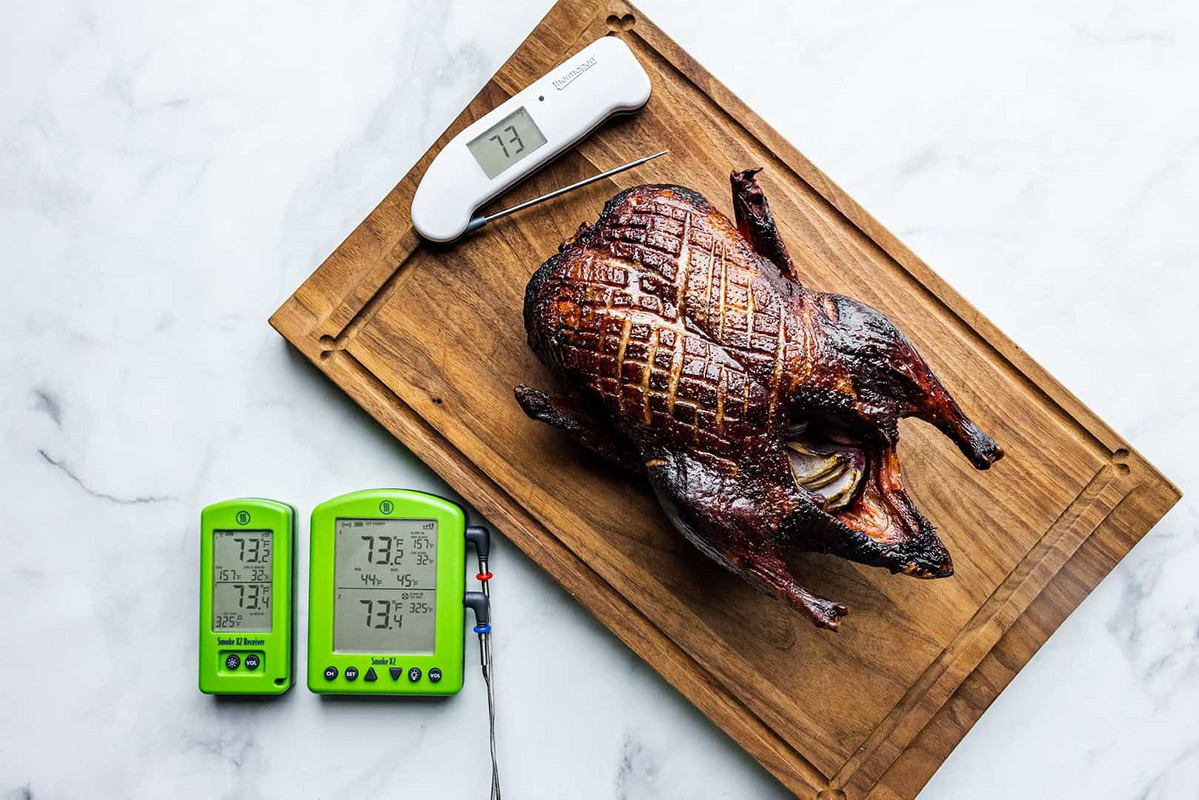
We love using Smoke X2™ with its dual channels to track both the temperature of the meat and the temperature of your cooker at the same time. The wireless receiver is a lifesaver when it’s cold outside—you can keep an eye on both temperatures while keeping warm indoors!

➤ Digital Instant-Read
It’s important to always verify that your target temperature is the lowest temperature inside the meat. When you’re smoking meat it’s important to only open the lid as little as possible to maintain an even smoking temperature. The speed and accuracy of a Thermapen® ONE can’t be beat, and will keep your temperature spot-checking time down to a minimum.
0 comments