

We look at a lot of recipes and food photos here. We get to spend time browsing blogs, perusing recipes, and poking through the food side of Instagram to find material to talk about. Of course we haven't seen it all, and a new presentation, a new pairing, a new sandwich is always intriguing to us.
Intrigued is exactly how I felt when I was pointed to this traditional English rolled brisket. Yes, rolled brisket! The images I found were reminiscent of the roasts I'd seen in old pictures and even cartoons throughout my childhood, and I felt an instant affinity for this foreign and yet familiar dish.
And it doesn't disappoint. Perfect for a warm weekend dinner on a cold winter night, the tender meat yields plenty of delicious jus for pouring over mashed potatoes or sopping up with fresh rolls. Here we'll walk you through the basics of a rolled brisket, including, of course, the temps you need to know to make your first attempt at this comforting dish a success.
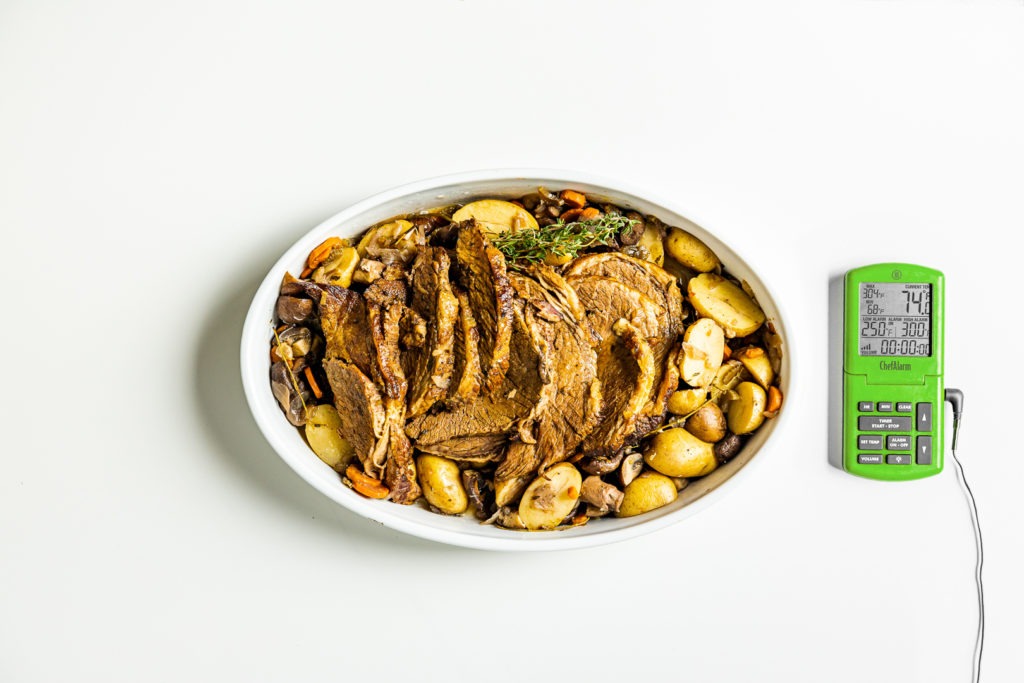
What is Rolled Brisket?
Rolled brisket is simply that: a brisket that is rolled up into a cylinder, tied, and cooked. This transforms a brisket from a large, flat, unwieldy cut into a smaller, easier-to-handle piece. Being a British dish, the cut is often braised rather than smoked, though smoking a rolled brisket may be a worthy experiment for a future post.
Tying a brisket joint
A rolled brisket is also called a "brisket joint" where 'joint' takes on the British sense of "a large piece of meat cooked whole or ready for cooking," and making one is easy. A brisket flat from a 5–6 lb whole brisket (we started with the whole brisket and trimmed the point off of it) is trimmed of fat on one side, seasoned, and rolled so that the grain of the meat runs along the length of the newly formed cylinder. It is tied with butcher twine in as many places as needed to secure it. If you feel uncomfortable with butchery techniques like this, you can most likely ask your local butcher to do it for you.
Cooking a rolled beef brisket
As we said above, this cut is usually braised, and it's a phenomenal way to do it. The beef is browned and cooked with a little stock or wine in the bottom of the pan, an abundance of vegetables, a good dose of salt and pepper. To make sure the whole roast gets to bathe in the richly flavorful broth, it should be turned every so often during cooking. This will also help the roast joint cook more quickly, as the direct heat transfer from the liquid to the meat is more efficient than the transfer from the air.
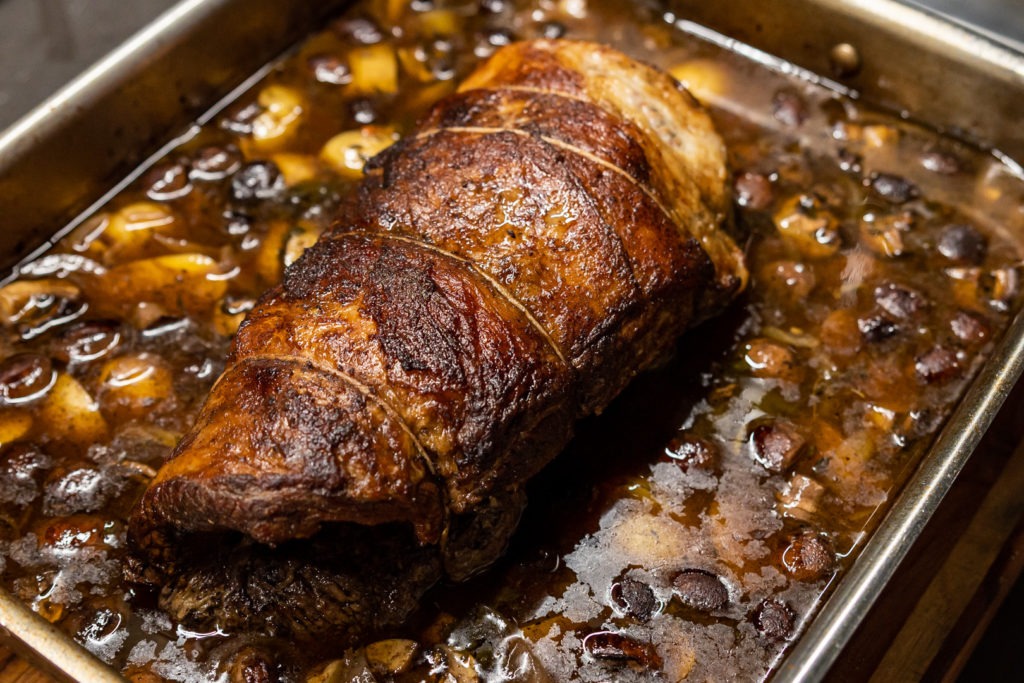
As the brisket flat is full of chewy connective tissue, it will certainly need time to break that collagen down. As with barbecued brisket, this is best accomplished by heating the brisket to an internal temperature of about 200°F (93°C). A ChefAlarm® is perfect for this task, as it can serve as both timer and thermometer for our cook. Using an optional waterproof probe is a good idea if you have one, as the cooking environment can get pretty steamy on this cook.
We'll jumpstart the cooking by putting the roast in a hot oven—375°F (190°C)—for 20 minutes, then braising at a lower temperature until the brisket reaches 200°F (93°C)—verified with a Thermapen® ONE, of course. Then, to be well sure that it's tender, we'll add some potatoes and mushrooms to the braising liquid and cook it all until those are cooked through. That extra time at the final temp will ensure proper collagen melt.
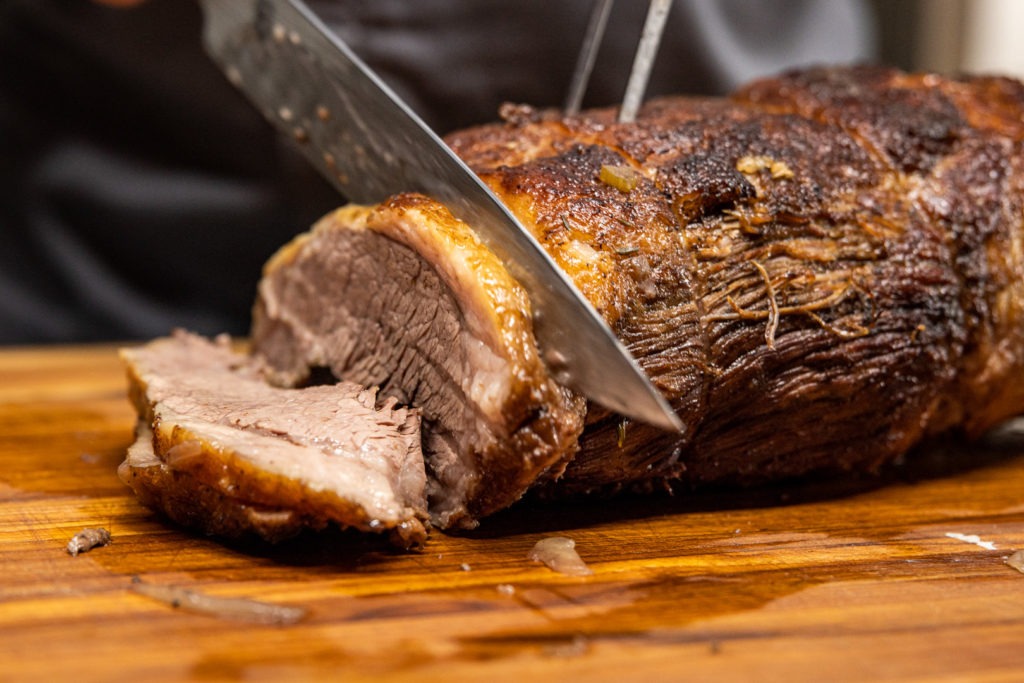
Though it takes a long time (plan 4–6 hours for the cook), this roast of brisket is well worth the time. A lazy Sunday spent pottering around and checking through the kitchen from time to time is a perfect way to do this dish. You'll get savory, amazing meat and veggies that you'll love, and the ChefAlarm and Thermapen with give you the confidence that you've cooked everything properly. Give this British classic a try and warm up your weekend.


0 comments