

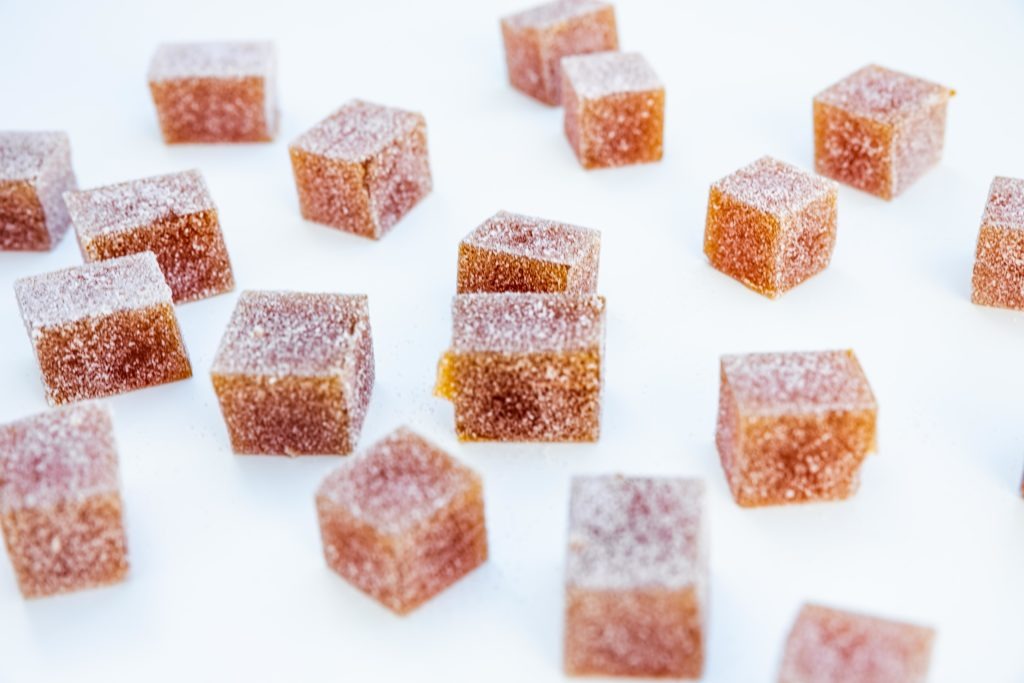
I first tasted pâte de fruit when I was working in a high-end cooking goods store. We received a shipment to sell and sampled a box so we could know how to answer customers’ questions about them. It was all I could do to not eat the whole box. I’d never encountered something quite like this: the very essence of fresh, ripe summer fruits in a small, sugar-coated cube. I ate well more than my fair share of them.
Only later did I learn that they are actually quite easy to make, not something that comes exclusively from candy factories. All you need is the right pectin and a thermometer. Here, we present a recipe developed for us by The Butter Book for passionfruit and apricot pâte de fruit that will become a fast favorite.
(For more on why French Pastry School trusts ThermoWorks, take a look at this video about how they use the Thermapen®.)
What is pâte de fruit?
Literally translated, pâte de fruit (pronounced pat-d-fwee) means “fruit paste,” and that about sums it up. These yummy treats are made by thickening fruit purees with sugar and pectin, letting them gel, cutting them into pieces and then rolling them in sugar. They are, in essence, extra-thick jam that you eat like candy. Yes, please!
Because these jam-candies are made with pectin rather than gelatin, they have a yielding, pleasant feel when you bite into them. They aren’t gummy like gummy bears but are firmly tender, solid, and supple. Combine that texture with the slight granular crunch of the sugar they are rolled in and you come away with an irresistible confection.
How to make pâte de fruit
As with all jam, the jelling of pâte de fruit is dependent on the concentration of sugar, acid, and pectin. Get enough sugar in the presence of enough pectin, activate it with some acid and boom, jam. More pectin will yield more gelling, and if you use enough, you end up with something that you can cut into squares. Getting those ingredients in the correct proportion is usually a game of evaporation: your fruit/sugar soup must be reduced by a certain amount to obtain the concentration you need, and we measure that concentration indirectly via temperature.
As water cooks out of a solution, the concentration of sugar increases, thus increasing the boiling point of the solution itself. By measuring the temperature at which our solution is boiling, we actually measure the concentration of sugar. The concentration we want occurs at 223ºF (106ºC), adjusted for elevation. (Water evaporates and boils out more readily at higher elevations, meaning the concentration is higher at lower temps.) Decrease the final temp by 1°F/500ft elevation for proper results.
Nailing that critical temperature is the key to these candies. Short change the temperature and you’ll end up with a thick jelly (tasty, but not what you want), overcook it and the texture is ruined. Use an accurate instant-read thermometer like Thermapen® to watch the temps. Once you hit that critical temperature, pull the candy from heat immediately.
Choosing the right pectin for pâte de fruit
There are many types of pectins on the market that react differently to different sugar and acid concentrations. This recipe calls for apple pectin, and in these ratios, it won’t work with any other kind. Apple pectin is pure pectin, whereas most pectins you buy off the shelf in grocery stores are cut with dextrose or other fillers. They are all well and good for many uses, and you can make them work for pâte de fruit, but here we use apple pectin for best results.
The only trouble with apple pectin is finding it. The internet, of course, works well. But I found ours at a local health-food store where it is sold as a fiber supplement. I bought a bottle of capsules, cracked open several dozen, and used it for the recipe. It came out cheaper than buying a cannister of the pectin from specialty food retailers online and was not inconvenient. I did try the recipe two or three times with “standard” pectins and had no success. Get the apple pectin—you can use it in your jams and jellies, too.
Note on fruit purees
Fruit purees can be purchases at high-quality grocers as well as restaurant supply companies. They can be purchased online as well, often from unlooked-for sources. Apricot puree, for instance, is often available form home-brewing stores. You will have to buy well more than you need for this recipe, but they are endlessly useful in any kitchen.
Passion Fruit-Apricot Pâte de Fruit Recipe
Created for ThermoWorks by The French Pastry School
Ingredients:
- 15 g Apple pectin
- 60 g Granulated sugar
- 250 g Passionfruit puree
- 250 g Apricot puree
- 108 g Glucose or corn syrup
- 528 g Granulated sugar
- 4 g Lemon juice (bottled)
- Granulated sugar as needed
Method:
- Line a quarter sheet pan or a shallow dish with parchment paper.
- Mix the pectin with the 60 g of sugar, set aside.
- Heat the two purees in a medium saucepan to 104ºF (40ºC) while stirring continuously with a whisk. Use a Thermapen® to watch the temperature as you stir.
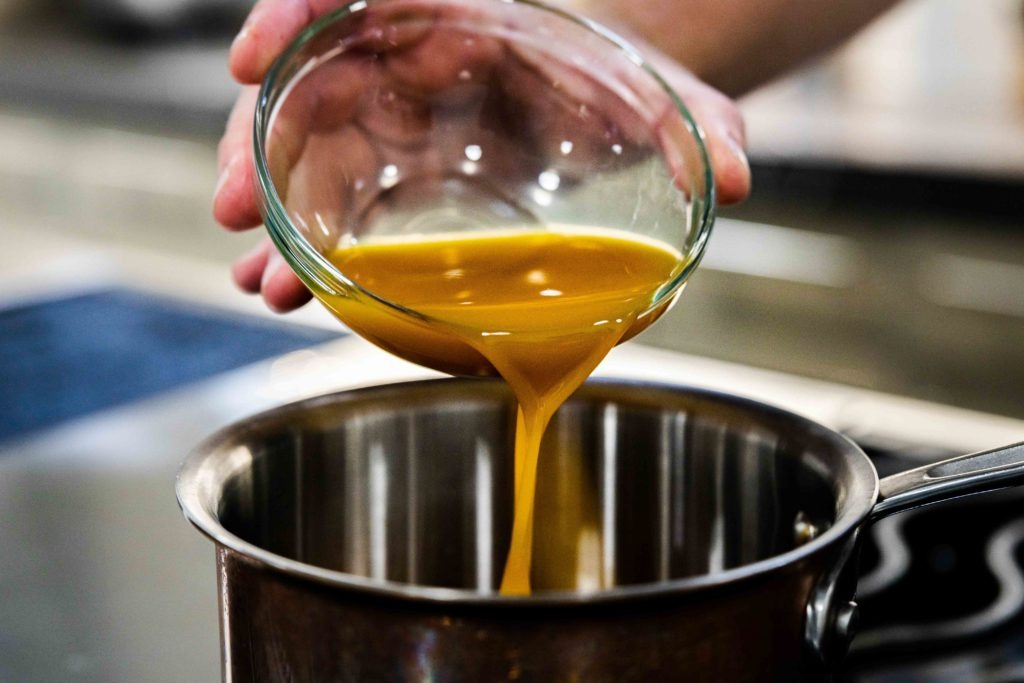
- Gradually add the pectin/sugar mixture and bring to a boil while stirring continuously with a whisk.
- Warm the glucose or corn syrup in the microwave for 10 seconds and add it to the puree mix.
- Warm the 528 g of sugar in the microwave for 1 minute. (This will help speed the cook by not lowering the temperature of your mixture as much when you add it.)
- Add the warm sugar gradually to the puree mixture and cook to 223ºF (106ºC) while stirring, monitoring with your Thermapen®. (Adjust this temperature according to your elevation, subtracting 1°F for every 500 ft above sea level.)
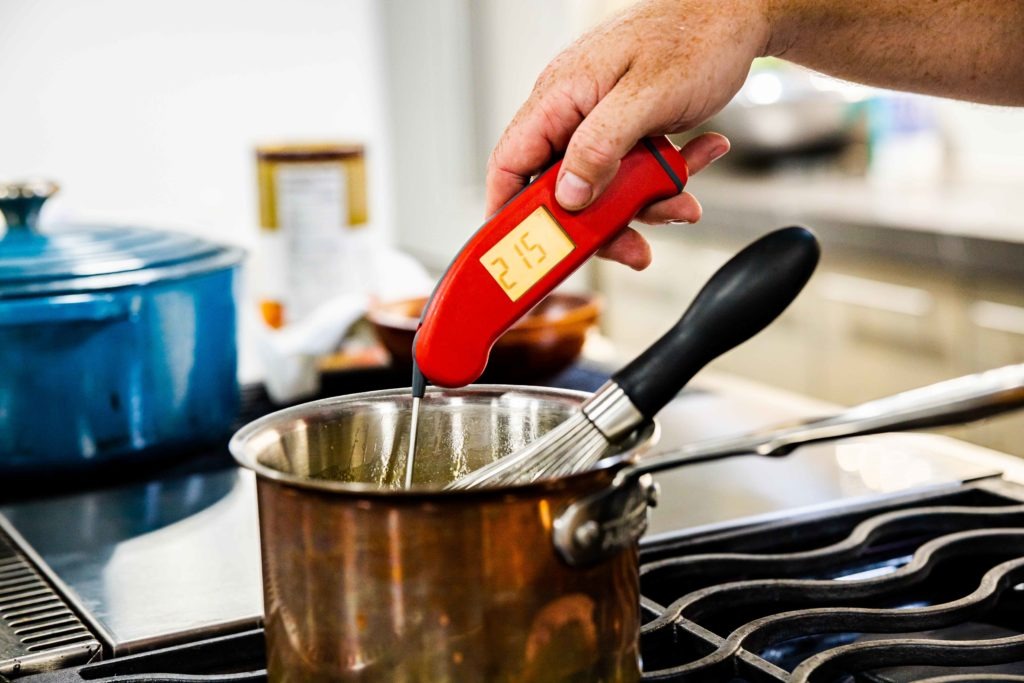
- Remove the mixture from the heat and add the lemon juice.
- Immediately pour the mixture in the sheet pan.
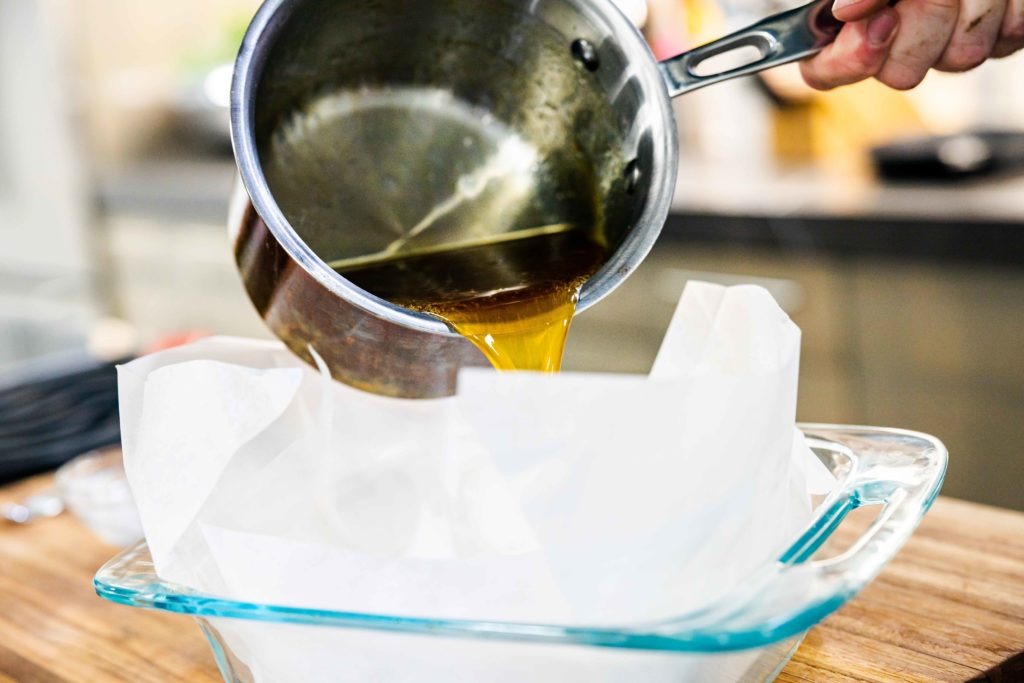
- Cool for 2 hours. Once the pate de fruit is set, cut it as desired and roll each piece in granulated sugar.
- Note: if the sugar won’t stick, dip each piece briefly in a little Everclear. The super-high proof spirit won’t absorb into the candy (you need something with more water in it, like vodka for that), but will help the sugar stick before quickly evaporating.
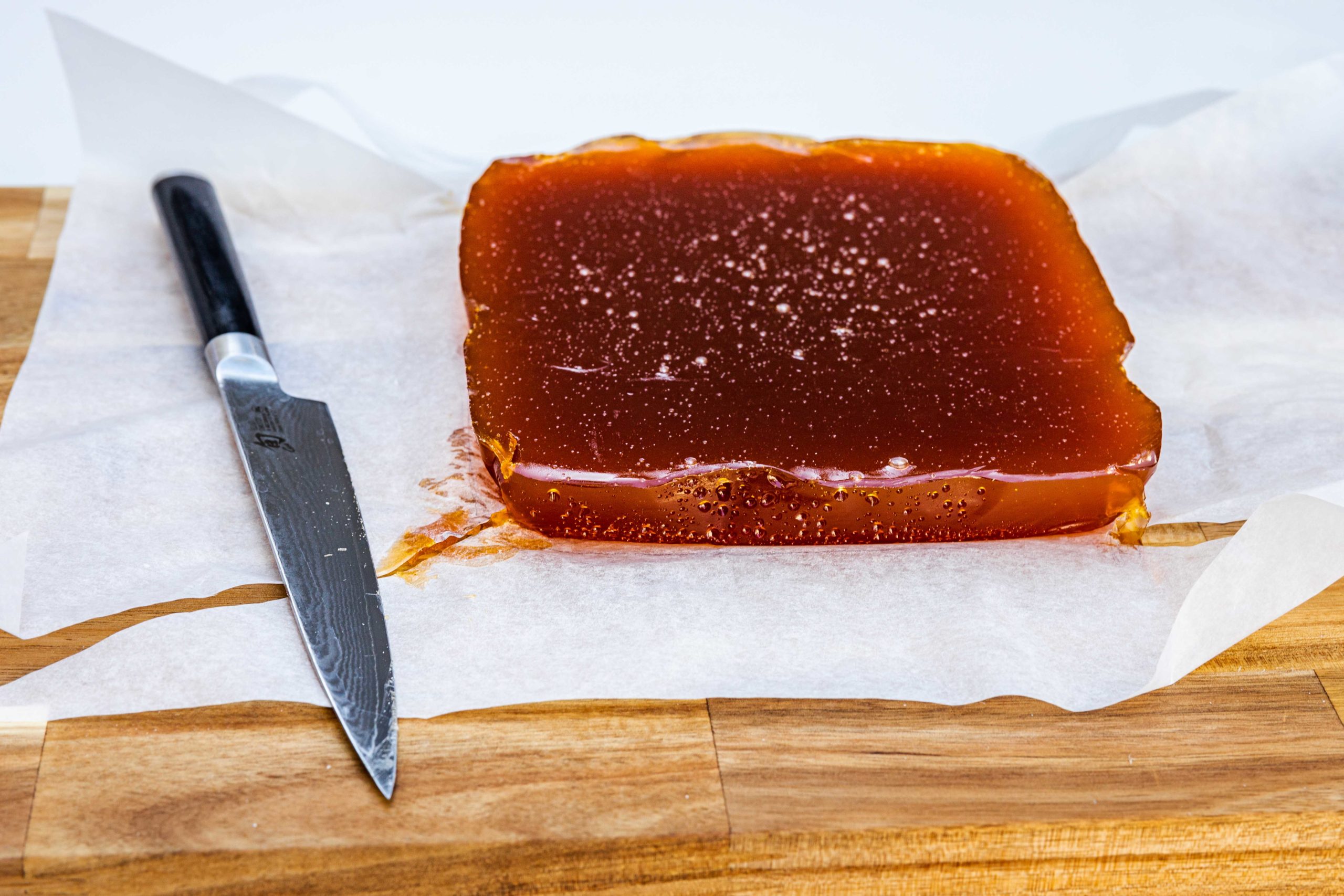
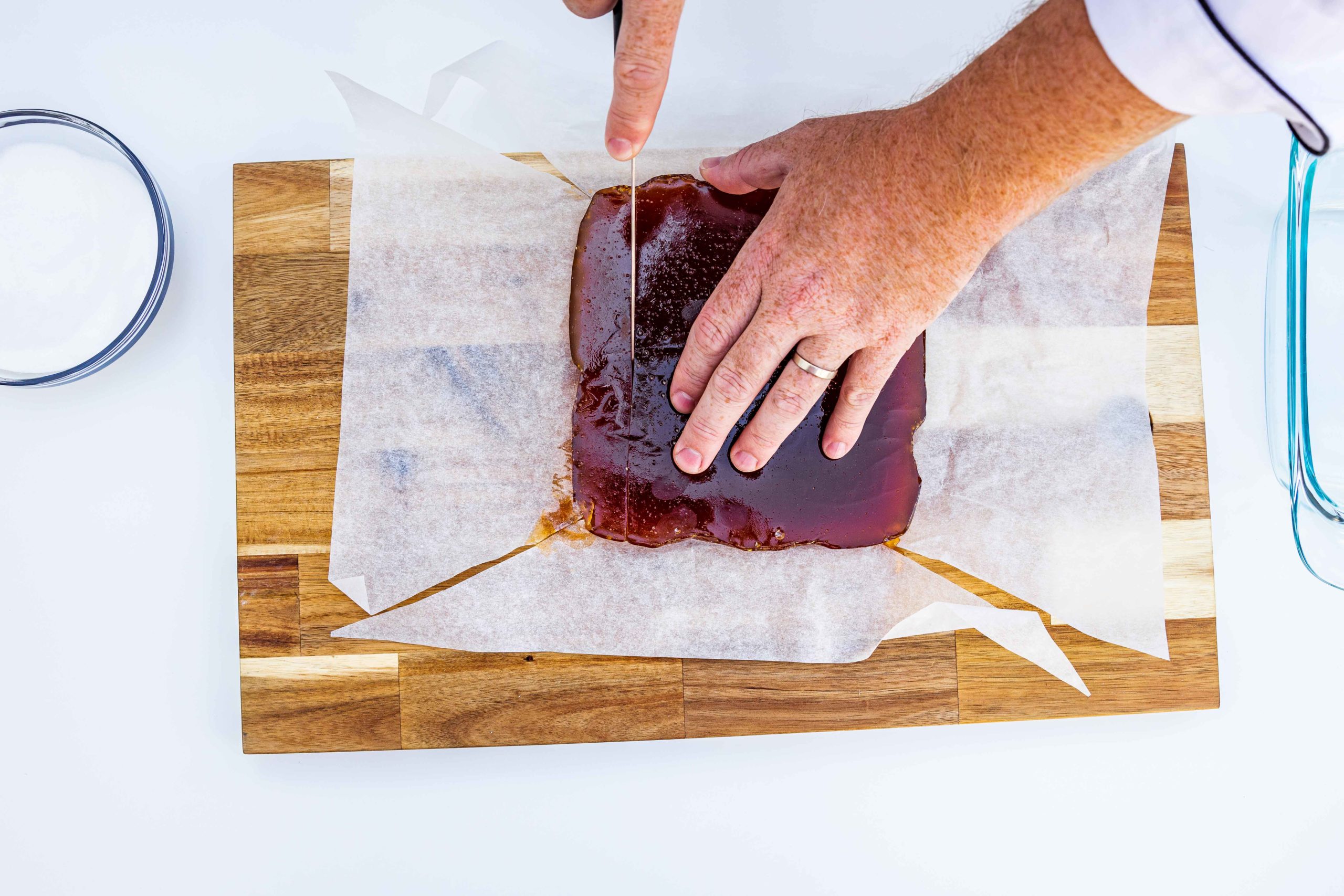
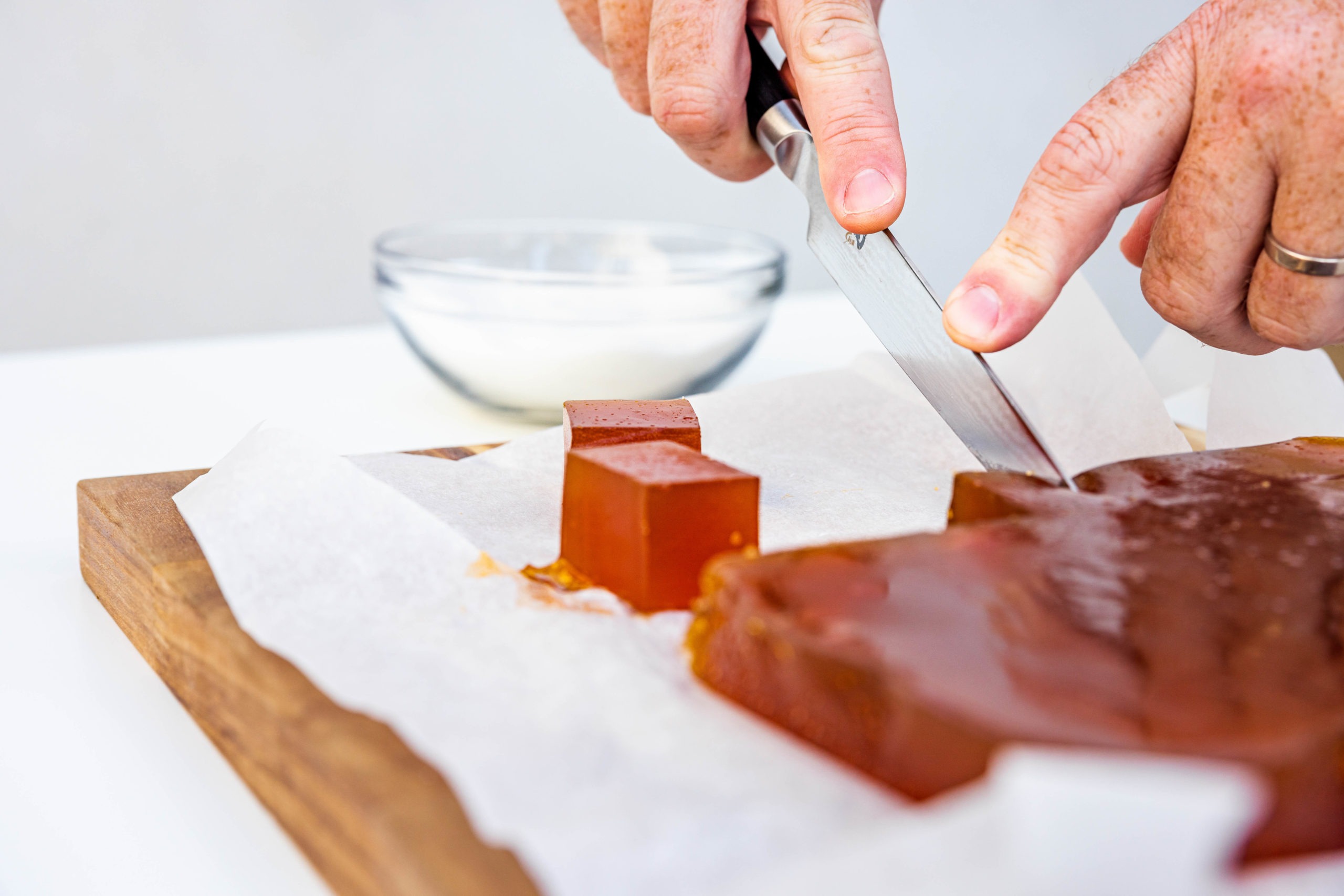
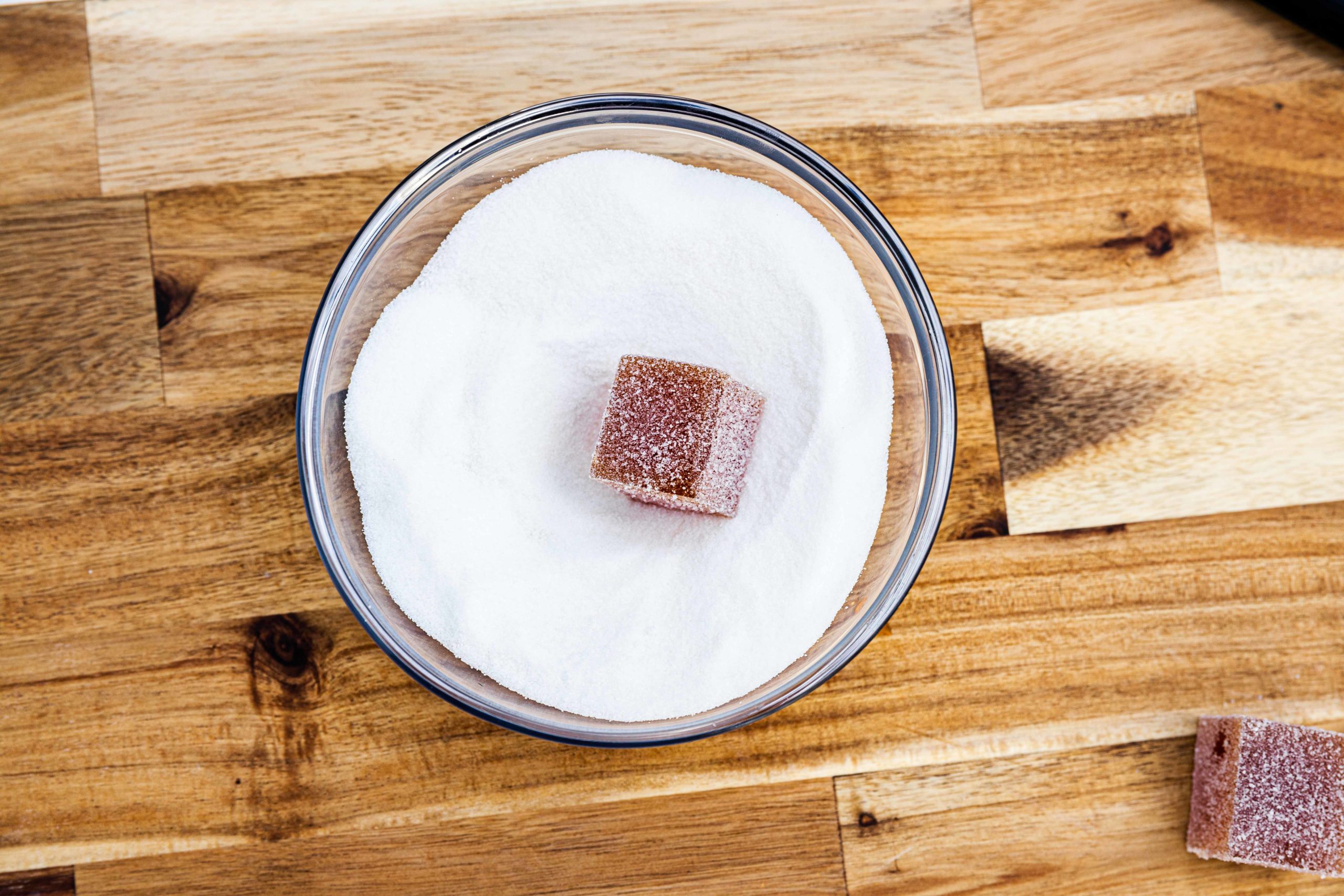
- Serve. Note: They can be frozen if first dusted lightly with starch and then covered tightly with plastic wrap. Thaw at room temperature without unwrapping, then moisten the pieces and roll in sugar.
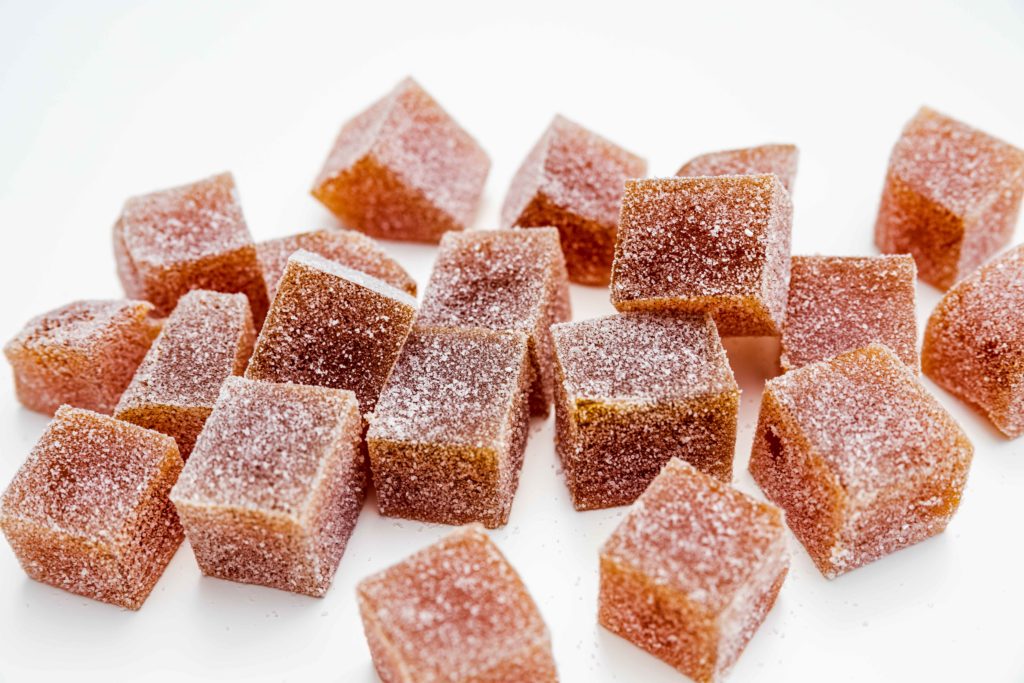
Once you taste these fruity delights, you’ll wonder why the world held them back from you for so long. Packed with bright, fruity flavor and with that amazing mouth-feel—obtained by careful temperature monitoring—they will not disappoint. Give them a try!


0 comments