

Though regional styles abound in BBQ, there is one place where they all come together: Kansas City. Known as the BBQ Capital of the World, KC has a rich and storied history, not to mention some serious BBQ clout—all the great BBQ competitions run on KCBS (Kansas City Barbeque Society) rules, even those in other states! That’s right, Memphis in May is run by Kansas City rules.
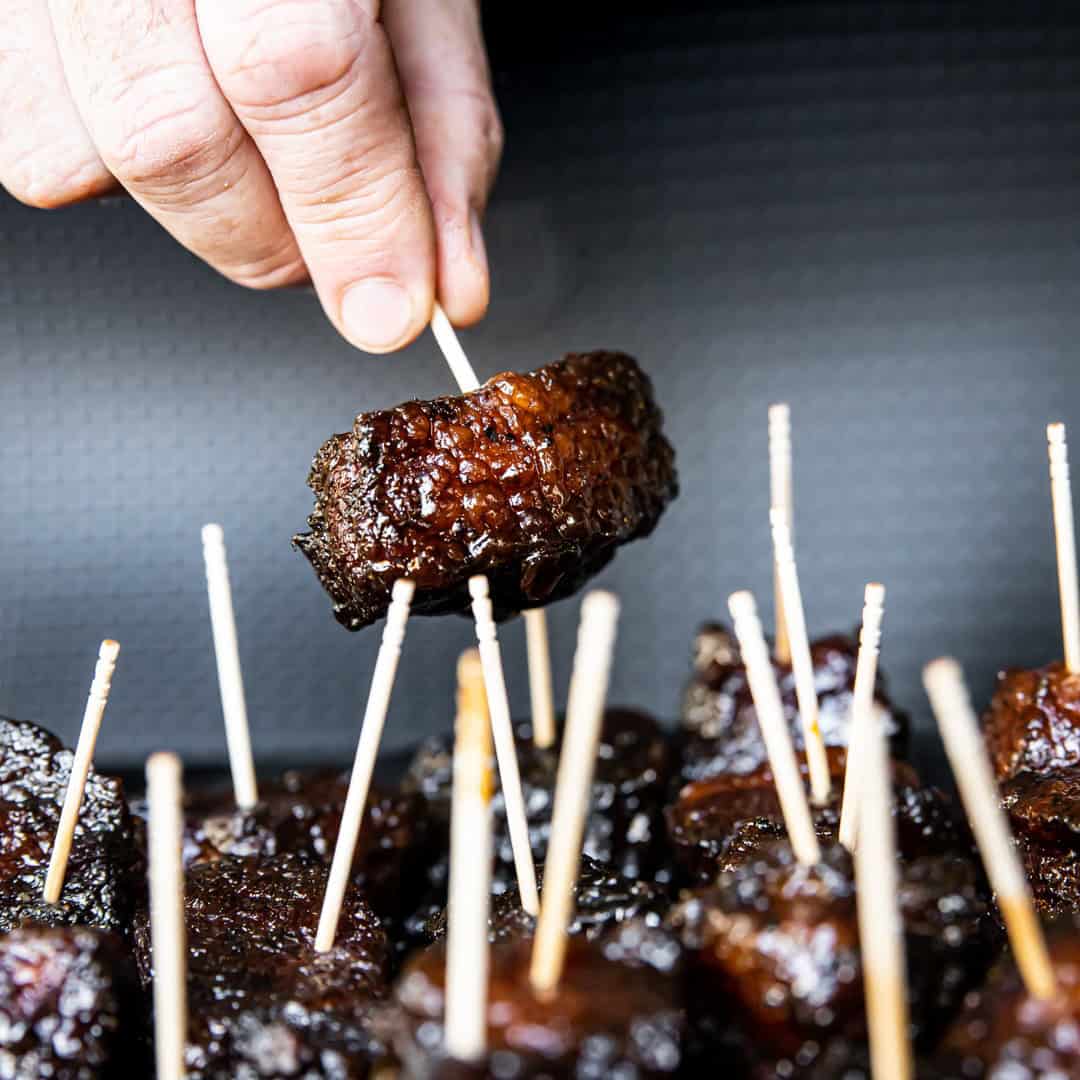
But even more importantly, Kansas City is the home of Brisket Burnt Ends. Ah, burnt ends … the fatty, rich, saucy, cubes of jelly-like meat made from the re-cooked point of the brisket. If you like the point of a brisket (and you should), then you’ll love burnt ends! Here, we’ll show you Meat Church BBQ‘s fantastic method for making killer burnt ends, complete with temperature tips. Grab a leave-in probe thermometer and let’s get cooking!
How to make burnt ends
Burnt ends are the result of a little bit of delicious kitchen alchemy whereby collagen is transformed into gelatin and sugar is thickened into syrup. It’s a long process, but well worth the effort.
Burnt ends start by cooking a whole brisket. Then, the brisket point is cut up into cubes, re-seasoned with rub to cover the newly-exposed cube faces, and lightly sauced before being put back on the heat to finish cooking and to set the sauce. Now, that’s an oversimplification of what is happening, so let’s take a closer look at the thermal principles at play in creating these delicious treats.
Brisket collagen breakdown
The point of the brisket is the smaller, fattier of the two muscles that compose a full packer brisket. This cut, riddled with connective collagen, is what true brisket fans crave, dripping with juice and sweet-tinged fat. Of course, any part of the brisket is practically inedible if not cooked properly, but the point in particular must be cooked long enough to break down all the chewy collagen in it.
Collagen dissolution generally starts at around 150°F (66°C) but doesn’t really get going until about 170°F (77°C). As with all brisket, this means that simply cooking the meat until it is “done” is not enough—cooked to 155°F (68°C), brisket would require some serious steak knives to cut into. Completely dissolving collagen—full gelatin transformation—takes a long time, so making burnt ends requires a long time. (If you’ve ever cooked brisket or read about it on our blog, you know about the infamous stall that the brisket goes through as the collagen melts. It takes a while.) Based on your time needs, you can choose either to crutch or not to crutch your brisket to move through the stall more quickly.
Either way, you don’t want to cook all the way through the stall before cutting it up. In fact, you want to pull your brisket from the heat when your point reaches 195°F (91°C). That’s the ideal temperature to cut it up because if it were much more tender, actually cutting it into cubes could prove difficult! The rest of the collagen is dissolved after the beef is cubed, dressed, and put back on the heat. The increased surface area of the cubes allows the heat to enter the meat more easily, raising the temperature much more quickly.
That being said, brisket burnt ends cooked to 195°F (91°C) are already quite tasty. They could be more tender, but they’re pretty good already. So cooking to an exact 203°F (95°C), like we recommend for brisket generally, isn’t critical for the finished product. The critical temps you need to pay attention to are the 195°F (91°C) internal temp for the initial cook before cutting and 225°F (107°C) for your smoker. A leave-in probe thermometer like the Smoke X2™ can help you nail those critical temperatures, not to mention monitor the cook while it’s happening. Oh, and the Billows ™ fire-control fan can keep your smoker right on temperature while you’re sleeping. (Brisket takes 12+ hours to cook; you’ll need a nap.)

Burnt ends: candy coated? Almost!
The transformation of collagen into gelatin and the accompanying tenderization of the meat is only part of the transmutation of brisket into the golden nuggets that are burnt ends. The rest comes from the seasoning and sauce.

Burnt ends are so delicious partly because they are so heavily seasoned. Each cube is individually coated in rub. Matt Pittman over at Meat Church BBQ recommends using a blend of rubs, one that is more savory and another that is sweet, to strike a balance in the intense flavors that will be imparted to the meat.
And to make sure that the meat is fully well flavored, Matt adds an interesting step to the early preparation of the brisket. When trimming the excess fat from the brisket, also trim most of the point away from the flat, trimming out most of the deckle fat between the muscles. Separating the muscles allows you to season the top and bottom of the point before cooking so that the salt and spices can more fully incorporate into the meat during the long initial cook.
To separate the muscles, find the small seam of fat where the point connects with the flat on the point end of the brisket.

The seam located, use a sharp boning knife to seam-out the two muscles. Trim the point free except for the last inch or so connecting it to the flat. Trim out excess fat so that the point is nearly bare and the flat has a 1/4″ layer of fat.

Now when you season the brisket for cooking you can season in between the two muscles, giving your brisket a deeper flavor. When you cube up the meat, you’ll have two sides already seasoned! (Also, by removing the fat between the two muscles, you make the brisket much more uniformly shaped, helping it to cook more evenly.)
So what about that candy coating I was alluding to? Enter sauce. Giving the beef bites a light coating of sauce before recooking them means that the water in the sauce will partially cook out, thickening the remaining sauce until its flavors are concentrated and it becomes sticky. Note, though, that they are not caramelized. Sugars don’t caramelize until temperatures above 300°F (149°C). If you want true caramelization, you’ll have to blast your burnt ends with some real heat, but they don’t need it. They are fine on their own sticky merits.
0 comments