

If there is a dish that represents decadence, luxury, and richness, it is beef Wellington. This dish, beloved in—and strangely discarded since—the ’60s, is every bit as delicious today as it was in the era of Continental Cuisine. And how could it not be! It’s a beef tenderloin coated in sautéed mushrooms with pâté all wrapped up in puff pastry. Those are four of our favorite things in the whole world already, and when you put them all together …
But isn’t Beef Wellington super difficult? It’s an experts-and-real-chefs-only kind of dish, right? Absolutely not. Just because it has many steps does not mean it’s difficult! With step-by-step guidance and with some good thermometers—like RFX MEAT™ and Thermapen® ONE—you really can get perfect results. So let’s take a look at this festive classic and, with some help from one of our culinary heroes, J. Kenji López-Alt of SeriousEats.com, let’s explore its thermal mysteries.
What is Beef Wellington?
Though popularly associated with Arthur Wellesley, First Duke of Wellington, there is no record of the dish by this name before 1940. In fact, there are few dishes that even match its description before that time! (For a full accounting of its recorded history, see The Food Timeline.)
But regardless of the provenance of the name, the dish is worth eating for its own sake. As we said above, it consists of a beef tenderloin with duxelles (pronounced dook-sell)—sometimes containing truffles—and pâté (often of foie gras, which is fattened goose or duck livers), all wrapped in a dough—sometimes basic pie dough, often puff pastry.
Gordon Ramsay has been working to re-popularize the dish with his take on it that includes a mustard rub for the beef and an extra wrap in prosciutto di Parma or other dry-cured ham—a great idea! But Kenji takes it one step further by wrapping the prosciutto, duxelles, and loin in filo dough before wrapping it in puff pastry. Why? Because filo is great at making packets that contain liquid, and that’s great for keeping your puff pastry from getting soggy, one of the common problems with Beef Wellington. Genius.
What is duxelles? Why do you need it
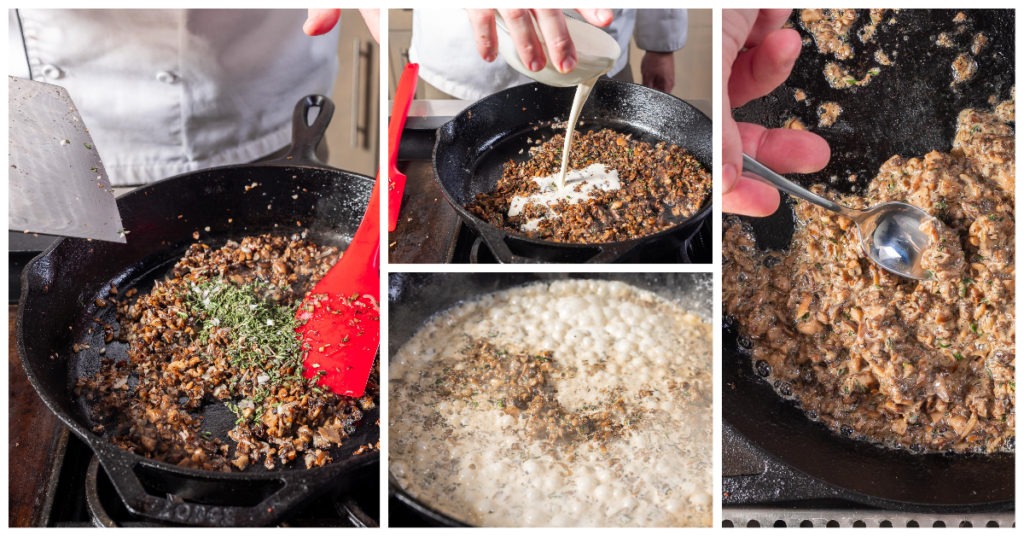
“You keep using that word,” you say. “What is it?” Duxelles is a crumbly, spread-y paste made by sautéing finely chopped mushrooms with shallots or onions and herbs in butter. It’s amazing. Even people who don’t like mushrooms like it. Why? This is a flavorful umami bomb. There are loads of naturally occurring glutamates in the mushrooms and onions that combine and condense to make something delicious. It’s great on buttered toast, fantastic on a steak, and a revelation when combined with pâté in beef wellington. But it is tasty enough to stand on its own, stuffed into a pie crust and eaten as a turnover without any meat. Once you start making it, you'll never go back. It will become something you crave, especially in the cold winter months when comfort is king.
Sometimes, as in this recipe, it is finished with a little bit of brandy, Madeira, or sherry and cream, which just adds to the richness and flavor-depth of the whole.
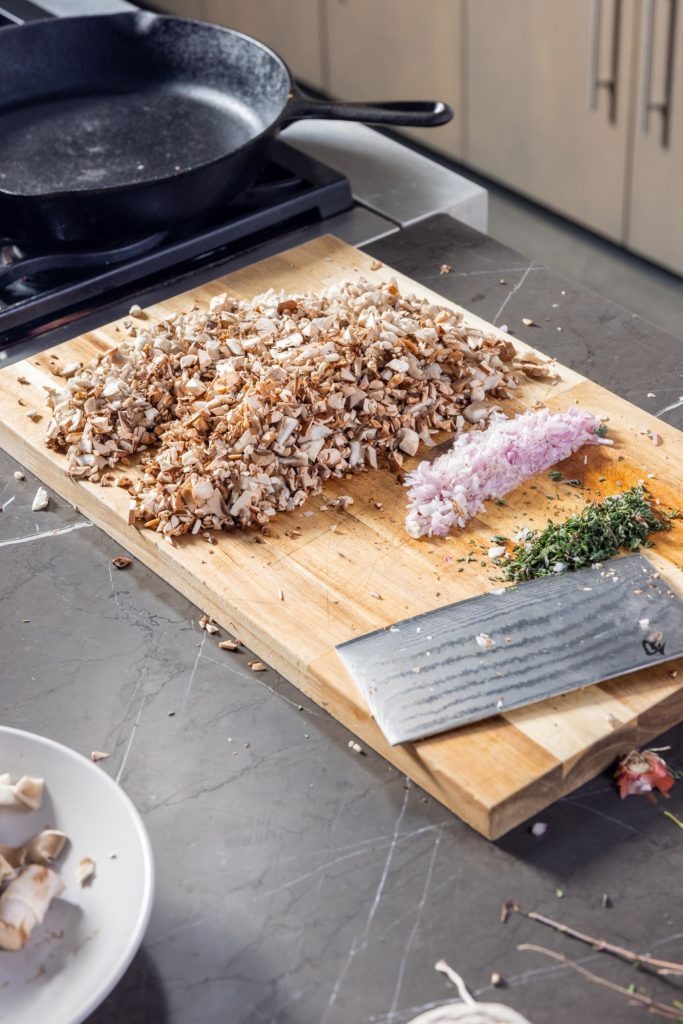
We minced our mushrooms by hand, but that’s not necessary. You can use a food processor for the mincing, but a little precutting helps. Putting whole mushrooms in a food processor can be an exercise in frustration, as they quickly turn into spheres that just roll around on top of the blade. Slice the mushrooms coarsely before adding them to the processor. Work in batches for best results.
Beef Wellington: thermal properties and why it works
In our post on beef tenderloin, we recommend cooking to perfection by cooking more slowly, in a 225°F (107°C) oven. But for Wellington, we’re adding puff pastry to the mix, which needs an instant hit of high heat to create steam and puff the layers out. Can these two processes be reconciled? Yes.
In truth, they kind of reconcile themselves. We’ll cook the Wellington at 425°F (218°C) to puff the pastry. But we needn’t fear that our beef will overcook too quickly because once the pastry is puffed, it literally becomes a coat of insulation for the meat: all those air pockets slow the flow of heat from the outside to the beef and help keep it from overcooking.
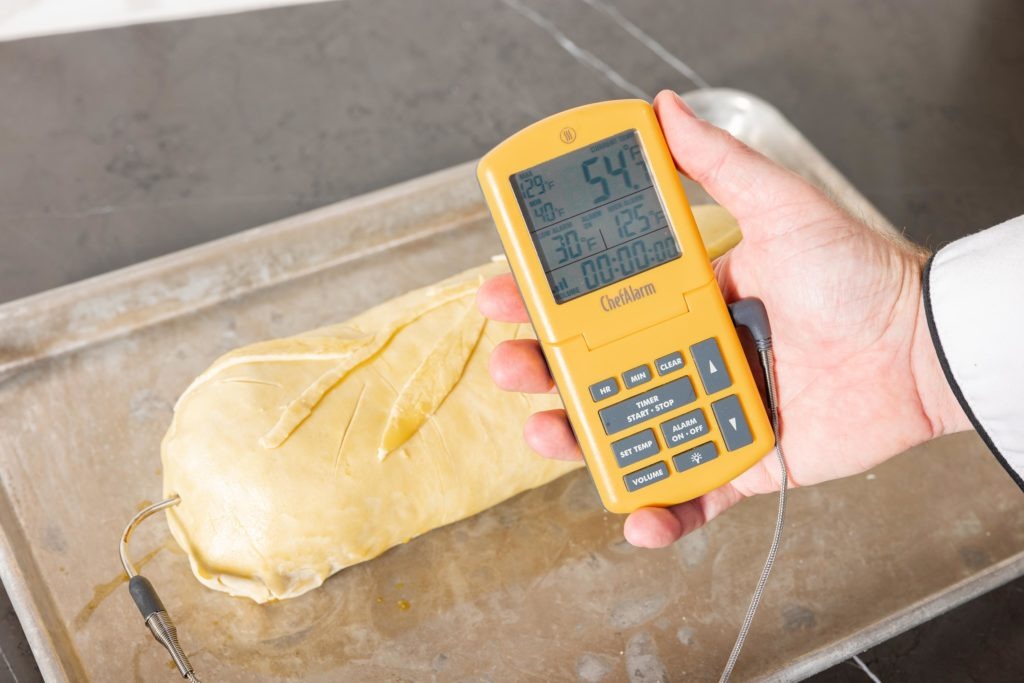
Even with that insulating blanket and a few chill cycles for the whole thing, we will still need to monitor the temperature carefully to achieve anything like perfection. Use RFX MEAT or ChefAlarm inserted laterally into the loin through the pastry to track the meat's internal temperature. Set the high alarm to 95–100°F (35–38°C) for perfect medium-rare. (That seems very low, but with the high-heat cook makes for about 25°F of carryover cooking!)
Notes:
- For extra protection from overcooking, do as we recommend in our other tenderloin post, and chill the beef before searing.
- Kenji’s recipe calls for slices of seared whole foie gras, but that’s not an ingredient that is easy to come by in most markets. We substituted pre-made pâté made with foie gras. You may still need to hit up a higher-end grocer or butcher to get it, but it’s much easier to find than a lobe of foie.
- If you’re crazy about DIY, you can make your own puff pastry, but even we're not doing that for this dish. Frozen puff pastry is delicious and readily available.
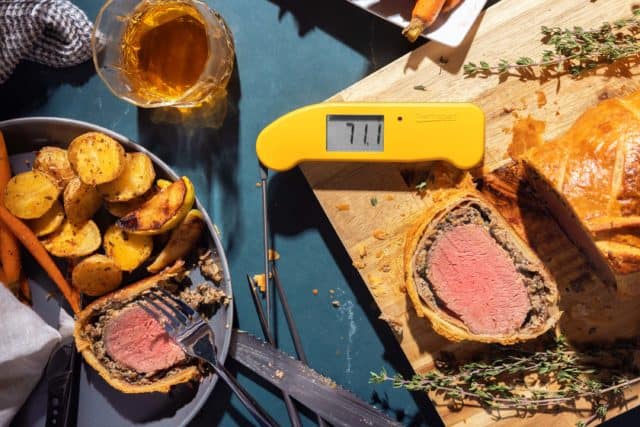
With the holidays coming up, you’re bound to be eating with friends or family at some point. Why not make the occasion a special one with a true out-of-the-ordinary centerpiece dish that is stunningly delicious? With the help of some thermal tricks (chilling and insulating) and a good thermometer or two (ChefAlarm and Thermapen ONE), you can achieve chef-worthy results that will amaze you and your taste buds, not to mention your family and friends.


0 comments